
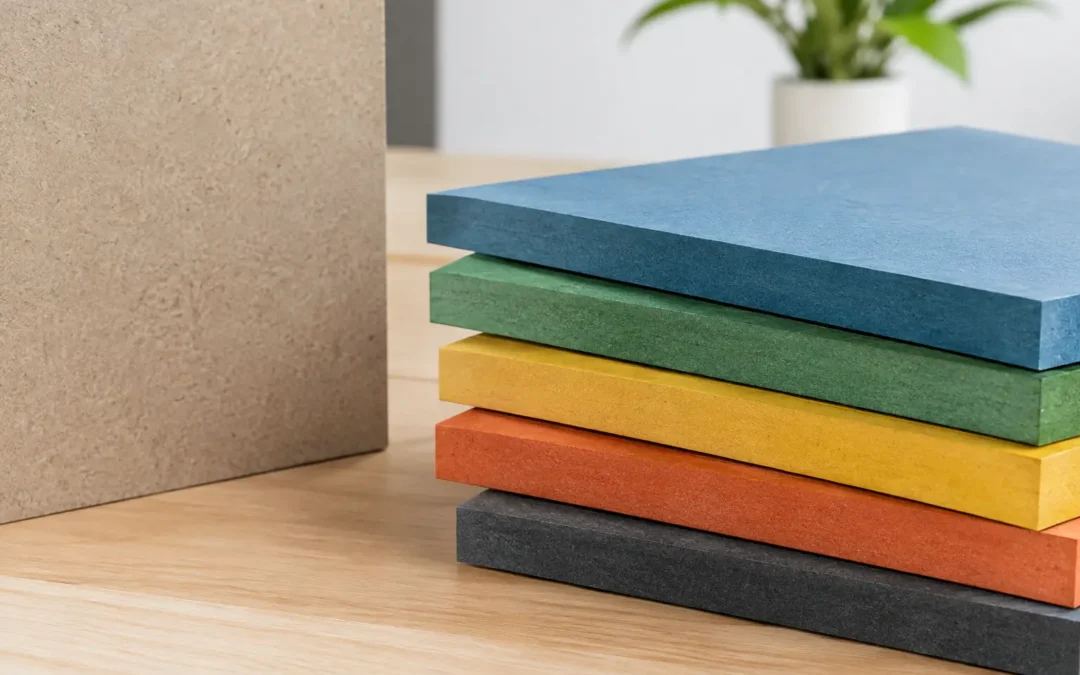
A cut edge is usually the giveaway. What is Valchromat MDF? It is a premium, coloured-through fibreboard made for visible joinery, furniture and interior fit-outs where a standard painted MDF edge would look flat, fragile or unfinished. Rather than applying colour only to the face, Valchromat is coloured through its full thickness, so the core, machined profile and routed detail all carry the same colour.
For joiners and fabricators, that changes the job. You can machine a chamfer, engrave a pattern, cut a radius or leave a clean exposed edge without relying on edge banding or a painted finish to hide the board beneath. It is a specialist material with a higher price point than standard MDF, but in the right application it can reduce finishing time and produce a far sharper result.
What is Valchromat MDF made from?
Valchromat is a branded decorative fibreboard, manufactured from wood fibres, colour pigments and resin under pressure. Like MDF, it has a fine and consistent structure, which gives it a smooth face and makes it suitable for accurate cutting, drilling, routing and CNC work. The difference is that its colour is integrated throughout the panel rather than sprayed, laminated or veneered onto the surface.
The boards are available in a range of colours, commonly including blacks, greys, reds, blues, greens, yellows and natural wood-toned options. Exact colours, sheet sizes and thicknesses vary by range and stock position, so it pays to specify the board by colour, thickness and intended use before pricing a job.
It is often described as a coloured MDF, but it is not simply ordinary MDF with dye added at the merchant. Its composition and intended use are geared towards decorative, exposed-edge work. Valchromat also has improved moisture resistance compared with standard interior MDF, which is useful in many internal environments. That does not make it an external cladding board or a substitute for a board specifically rated for constant wet conditions.
Why joiners choose coloured-through MDF
The main benefit is design freedom without complicated finishing. A cabinet door with a routed finger pull, for example, can retain a consistent colour through the routed recess. A reception desk can use exposed dark edges as part of the design. Decorative wall panels can be engraved, perforated or CNC-cut without revealing a pale fibre core.
This makes Valchromat particularly useful for shopfitting, display furniture, fitted furniture, shelving, cabinet components, feature wall panelling, interior signage, restaurant fit-outs and office joinery. It is also a strong option for high-spec domestic work, such as bespoke media units, wardrobes, alcove shelving and furniture-grade storage.
The board can be worked with the same general care expected for quality MDF. It cuts cleanly with sharp tooling, accepts detailed routing well and provides a uniform surface for drilling and machining. For repeated components or intricate patterns, CNC cutting is where the material can really earn its keep.
There is a visual advantage after machining too. With standard MDF, a cut edge normally needs sealing, priming and painting if it will be seen. With Valchromat, a sanded and properly finished edge can be part of the finished piece. That can save stages on a project, although it does not remove the need for good workshop practice.
The finish still matters
Coloured-through does not mean fit-and-forget. The face and exposed edges can be left with a natural matt appearance, but many fabricators apply oil, wax, lacquer or another suitable clear finish to deepen the colour and improve resistance to marking and day-to-day wear.
The best finish depends on the location. A low-contact decorative panel may only need a light protective treatment. A café table, retail counter or frequently handled cupboard front needs a finish system designed for abrasion, cleaning and the expected level of use. Always test on an offcut first, as clear finishes can alter the depth and tone of the board.
Valchromat MDF versus standard MDF
Standard MDF remains the sensible choice for plenty of jobs. It is economical, readily available in common sheet sizes and works well when the final surface will be painted, wrapped or fully covered. For painted skirting, wardrobe carcasses, basic shelving or non-visible components, paying for a decorative coloured core may add cost without adding value.
Valchromat comes into its own when the board itself is the finish. It gives a more deliberate, solid-colour appearance than painted MDF, especially around edges, joints and machined details. It also avoids the risk of a painted edge chipping to reveal a contrasting pale core.
There are trade-offs. Valchromat costs more per sheet, and colour matching between batches should be considered where a large project is being installed in phases. A clear coating can change its appearance, while natural light and different interior lighting can make the same colour look noticeably different on site. Order samples or make a small mock-up for client approval before committing to a full reception, retail or fitted-furniture package.
It should not be confused with moisture-resistant MDF either. Although Valchromat has enhanced resistance to humidity, moisture-resistant MDF is usually the more direct specification when the priority is performance in kitchens, utility rooms or other occasionally humid internal areas and the board will be painted. For bathrooms, wet rooms, exterior work or any application with regular water exposure, specify a product expressly rated for that environment.
Choosing the right thickness for the job
Thickness affects appearance, strength, fixing detail and cost. Thin boards suit decorative panels, cabinet backings and layered design work. Mid-range thicknesses are commonly used for cupboard doors, drawer fronts and wall panelling. Thicker boards give a more substantial exposed edge and are often selected for shelving, table tops, reception desks and freestanding furniture components.
Do not choose thickness on looks alone. Long shelves need support based on span, load and fixing method, particularly where books, samples, tools or heavy retail stock will sit on them. Large doors may require allowance for hinge choice, weight and movement. If the board will be used for a wide routed panel, leave enough material around the detail to maintain strength.
Where two exposed edges meet, test the joint detail before production. Mitres, dowel joints, biscuits, loose tenons and mechanical fixings can all work, but the cleanest option depends on the component and whether the joint will be visible. Pre-drilling is good practice near edges, and screw selection should suit MDF-type fibreboard rather than being treated like solid timber.
Machining and dust control
Use sharp cutters, suitable feed rates and proper extraction. Fine fibreboard dust is not something to accept as part of the job, particularly during extensive routing or CNC work. Workshop extraction, a suitable dust mask and clean handling make for a better finish as well as a safer working area.
Avoid blunt blades or excessive heat when cutting. They can darken edges, tear fibres or leave a finish that requires more sanding. If a decorative edge is the whole point of the material, allow time for a clean final pass and a controlled sanding sequence rather than trying to rescue rough machining after assembly.
Where Valchromat MDF works best
Valchromat is best specified where the customer can see and appreciate the material. A dark core can add definition to open shelving and display plinths. Bright colours can turn a children’s retail fixture, exhibition stand or creative workspace into a feature. Neutral colours work well in commercial interiors where the brief calls for a precise, architectural look without the variation of a natural timber veneer.
It is also useful where repeated machining would otherwise create a finishing bottleneck. Think routed cabinet fronts, acoustic-style decorative patterns, slatted features, engraved signs and components with integrated pulls. The saving is not always in the sheet price. It can be in fewer paint stages, less edge treatment and less risk of damage appearing as a different-coloured substrate.
For basic structural work, outdoor joinery, floor decking or areas subject to regular saturation, it is the wrong board. Use structural timber, exterior-rated plywood, suitable cement-based boards or another purpose-designed material according to the application. Decorative MDF should not be asked to do a structural or exterior board’s job.
Ordering Valchromat for a live project
Start with the drawing and working dimensions, then account for saw kerf, grain-free nesting layout and the amount of machining required. Because it is a premium sheet material, efficient cutting plans matter. Where colour continuity is critical, order the required quantity together where possible and retain labelled offcuts for future small repairs or additions.
Check every requirement before ordering: colour, thickness, sheet size, face quality, machining plan, finish and delivery access. A full sheet needs safe handling and a dry, flat storage area on site or in the workshop. Store boards supported evenly and protect the faces from scratches, dust and moisture before fabrication.
For trade customers working around Hertfordshire and London, WelBM can help source specialist sheet materials and discuss the most practical board option where a project needs a particular thickness, finish or machining approach. Getting the specification right before cutting starts is cheaper than trying to correct a visible edge after installation.
Valchromat is not the answer to every MDF job. But where an exposed edge, routed detail or saturated colour is central to the design, it gives joiners a material that looks considered from the first cut to the final fitting.
